Resource Tool: Skills Gaps, Bench Time and Utilisation Clarity

A delivery manager has two options on the table. Approve two new hires, or restructure the team to cover a stubborn skills gap on a key account. Both options sound reasonable in a meeting. Neither is defensible without evidence. That evidence usually sits in three places: a skills inventory, a view of who is on the bench, and an honest read on under or over utilised resources. A resource tool brings those views together, which is why it matters long before a recruitment requisition is raised.
Why Headcount and Restructuring Decisions Feel Like Guesses
The gap between what customers expect and what a team can actually deliver is often caused by a lack of governance intelligence. Leaders make decisions from anecdote, a spreadsheet tab or the loudest voice in the room. The result is a hiring decision that solves the wrong problem, or a restructure that removes cover the business did not know it needed.
Capacity planning exists to prevent exactly that. Guidance on the challenges of resource capacity planning notes that it helps organisations avoid overloading or underutilising resources. Those two failures are not opposites that cancel each other out. They commonly appear in the same organisation at the same time, on different teams or within different skill groups.
What a Resource Tool Actually Shows You
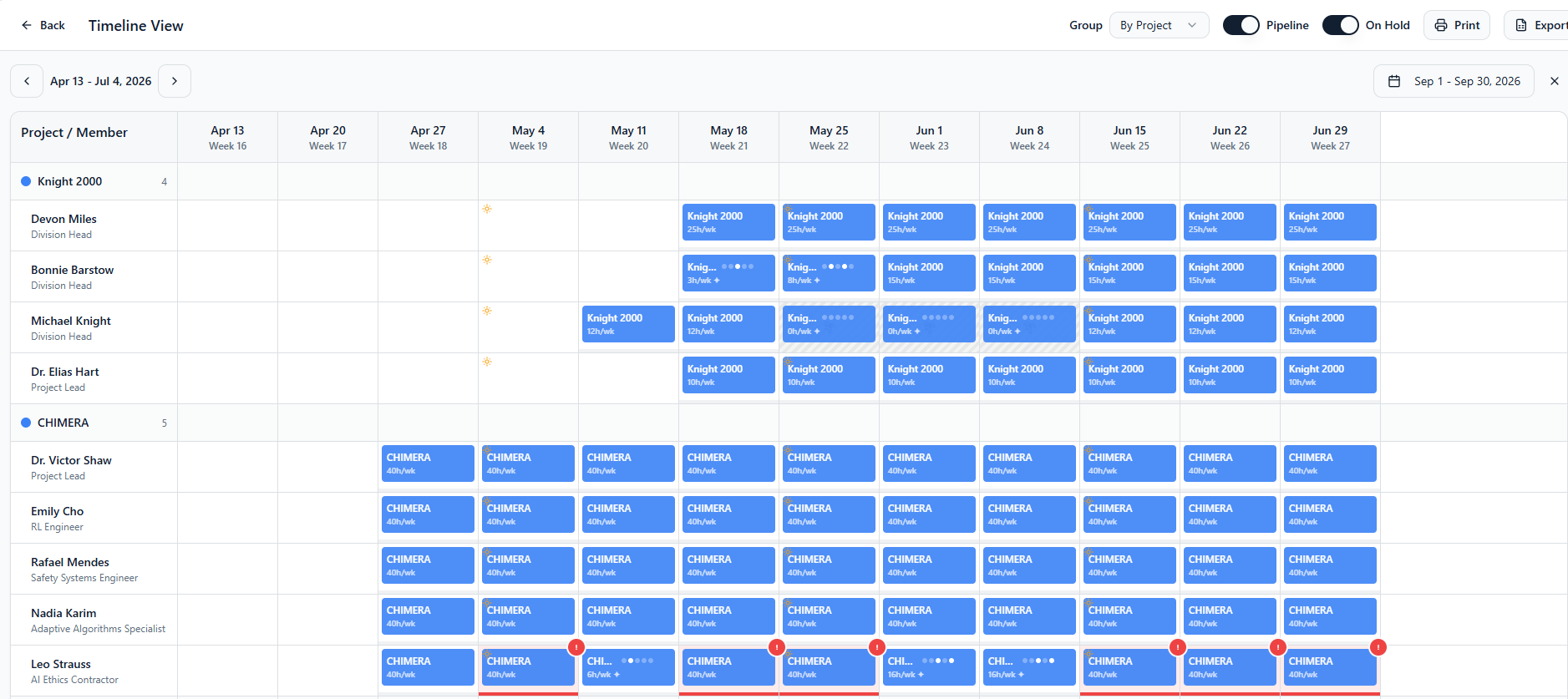
A resource tool is not a timesheet with a nicer dashboard. It is a live model of who is available, what they can do and where their time is committed. For a manager weighing growth against restructuring, the useful views are straightforward:
-
Who is available, and when, across shared resource pools rather than a single team.
-
Which skills each person holds, filtered by skill, team, role and availability.
-
Where allocations are stacked, leaving someone overallocated or close to it.
-
Which work is billable and which is not, so the commercial picture is visible alongside the delivery picture.
-
What demand looks like in the weeks and months ahead, not just today.
Each view answers a different question. Together they turn a debate about headcount into a conversation about capacity, capability and timing.
Skills Gaps: The Shortage Hiding in Plain Sight
Headcount numbers can look healthy while capability is thin. Research reported in HR press found that 20 per cent of workers are not proficient in their role, and 57 per cent believe skills gaps are having a negative impact on productivity. Those figures describe a planning problem, not only a training problem. A team can be fully resourced on paper and still lack the specific capability a project needs.
Skills data is often the weakest part of the picture because it lives in separate systems, or in someone's memory. A community discussion on resource skills described the appeal of adding skills to resource pools from a central resource or training database, rather than maintaining yet another list. That instinct is sound. Skills information ages quickly, and a stale list is worse than no list because it creates false confidence.
Avai-lability supports skills matching and filtering by skill, team, role and availability. That changes the question from "who is free?" to "who is free and can actually do this work?" The difference matters when you are deciding whether to hire, retrain or redeploy.

On the Bench: A Cost, but Not Always a Waste
Bench time has a real cost, and a large bench can hide a weak pipeline. It does not follow that every person without a full allocation is a problem. Bench resources can add value through mentoring, covering temporary gaps and providing support elsewhere, which increases their versatility and worth to the organisation.
Without good governance data, leaders tend to read the bench as either a crisis or a comfort, depending on the week. A resource tool separates productive bench time from idle bench time by showing what those people are doing, what they could do and what demand is coming. That distinction is central to any restructure, because cutting bench capacity to protect margin can remove the flexibility that keeps delivery on track.
Under or Over Utilised Resources Both Cost Money
Underutilisation looks harmless because nobody is complaining. The cost is hidden capacity: billable work declined, delays accepted or contractors engaged while capable people sit partially idle. Overallocation is louder but equally expensive. It contributes to burnout, delivery risk and quality problems, and it can trigger a hiring request that is really a scheduling problem.
Capacity planning guidance points to the same remedy in both cases: balance workload and put practical guardrails in place so overload is prevented rather than managed after the fact. A utilisation figure on its own is not enough. You need to know which skills are stretched, which projects are driving the load and whether the pressure is temporary or structural.
What This Means for Growing Headcount
Growth is the right call when demand is sustained, the required skills are genuinely missing, and existing capacity cannot be redirected without damaging delivery. A resource tool helps you test each of those conditions before you commit. You can see whether the shortfall is a headcount gap or a skills gap, whether the pressure sits in one team or across the shared pool, and whether the forecast supports a permanent role.
That evidence also makes the business case stronger. A hiring request supported by utilisation trends, forecast demand and a clear skills map is far easier to approve than one built on a feeling that everyone is busy.

What This Means for Restructuring
Restructuring without a skills view is riskier than it looks. A person who appears underutilised may be the only cover for a specialist task, a key client relationship or a capability that is difficult to replace. Equally, a team can look fully allocated while duplicating work that another group already does well.
Access control matters when this information is shared. Avai-lability provides Owner, Admin, Manager, Member and Viewer roles, so utilisation and commercial data can reach the people who need it without exposing everything to everyone. Restructures are sensitive, and the tool should support confidential analysis rather than fuel office speculation.
Questions to Ask Before You Approve Either Decision
Before signing off a new role or a restructure, put these questions to the data:
-
Which skills are in demand now, and which will be in demand next quarter?
-
Who has genuine capacity, after allowing for leave, part-time arrangements and non-billable commitments?
-
Is the pressure concentrated in one project, one client or one skill group?
-
Are any people overallocated in a way that masks a capacity shortfall?
-
Can an existing person be redeployed with reasonable support, or is the gap genuinely external?
-
What happens to delivery if the role is removed or the hire is delayed?
If the answers point in different directions, that is useful. It usually means the decision is not binary. You may need one hire and a redeployment, or a restructure plus a targeted training plan.

Where Avai-lability Fits
Avai-lability is a resource management and revenue forecasting platform for organisations that share people across projects. The AI Resource Assistant lets project managers ask questions about availability, skills and allocations in natural language, instead of waiting on PMO coordinators or chasing spreadsheet updates. Capacity planning and utilisation forecasting flag overallocation and burnout risk before they become delivery failures.
Revenue and budget tracking covers billable and non-billable work, so resource decisions can be weighed against profitability rather than utilisation alone. For a professional services firm, agency, consultancy or IT team, that combination gives leaders a defensible basis for growth and restructuring conversations.
Making the Data Trustworthy
A resource tool is only as good as the habits around it. Skills need to be reviewed as people train, specialise or move between teams. Allocations need to be updated when projects shift, not at month end. Forecasts need to be treated as living estimates rather than a one-off planning artefact.
Training still matters. Employees have said the learning resources available to them do not always suit their upskilling needs, which suggests that skills gap analysis should feed a practical development plan, not just a report. When the tool, the training plan and the delivery schedule point in the same direction, headcount and restructuring decisions become far easier to explain and defend.
Frequently Asked Questions
What is a resource tool?
A resource tool tracks who is available, what skills they hold and how their time is allocated across projects. It gives managers a shared view of capacity, utilisation and demand, replacing scattered spreadsheets and informal requests. In practice, it supports decisions about hiring, redeployment, project scheduling and revenue forecasting using current data rather than guesswork.
How can I tell if resources are under or over utilised?
Look at allocated hours against available capacity, then check the pattern over several weeks. Consistent low allocation can signal hidden capacity or weak demand. Consistent overallocation can signal burnout risk or a scheduling problem. Neither number means much without context about skills, project stage and non-billable commitments, so review them together.
Is time on the bench always a problem?
No. Bench time has a cost, but it can also be productive. People without a full project allocation may be mentoring, covering temporary gaps, supporting other teams or preparing for upcoming work. The useful distinction is between planned, purposeful bench time and capacity that is simply invisible to the people making staffing decisions.
When should we grow headcount instead of restructuring?
Grow when demand is sustained, the needed skills are genuinely absent and existing people cannot be redeployed without harming delivery. Restructure first when the issue is misallocation, duplicated effort or a mismatch between skills and project needs. A resource tool helps you test those conditions with utilisation, skills and forecast data before committing to either path.
How do skills gaps affect capacity planning?
Skills gaps mean headcount alone can overstate capacity. A team may have enough people but lack the specific capability a project requires. Research has linked skills gaps to lower productivity, and employees have questioned whether available learning resources meet their needs. Mapping skills against demand shows where hiring, training or redeployment will close the gap most effectively.